
Dating a Filipina begins with deciding where to meet her. A dating site, a mainstream app, Facebook through friends, a stay in the Philippines, or the Filipino community where you already live each put you in front of different women, and each changes how much of the two of you her friends and family are likely to see early on.
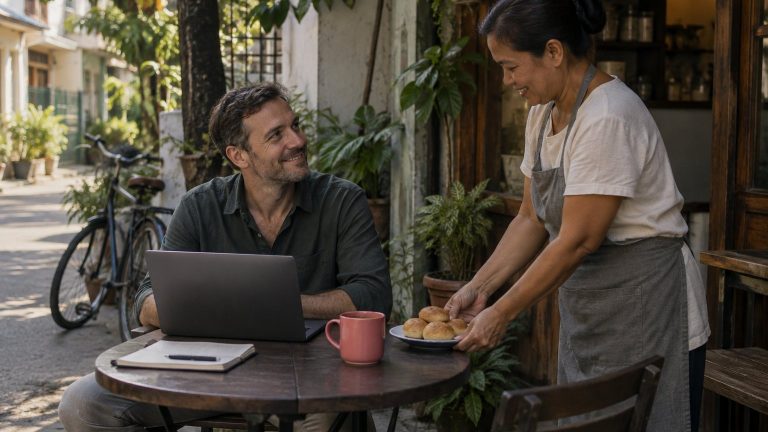 Filipina DatingPassport Bro in the Philippines: What to Expect31 min read
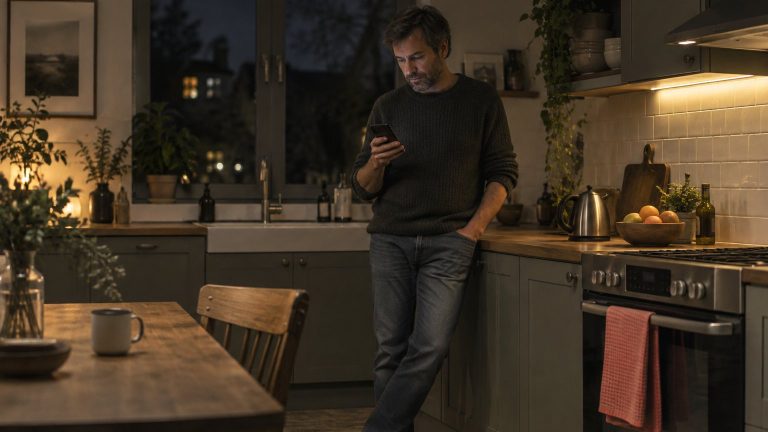 Filipina DatingMeeting Filipina Women on Social Media22 min read
 Filipina DatingHow to Attract a Filipina Woman and Make Her Fall in Love28 min read
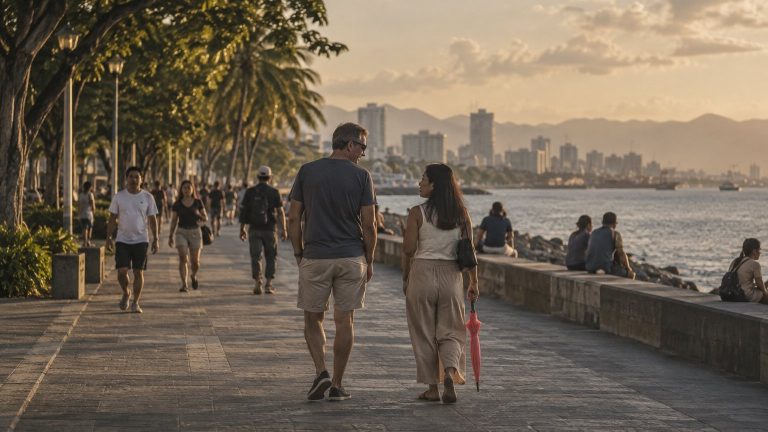 Filipina DatingTips for Dating a Filipina23 min read
 Filipina DatingDating Filipina Women Near You, Outside the Philippines17 min read
Contents · 8 sections
Pick the place by the relationship you want and the life you actually have. If you live in Ohio and want something serious, a site or an app and a lot of video calls come first; if you’re spending months in Cebu, people you meet through work, church or friends are a better start. This guide leaves out bars and nightlife and sticks to the places where you can get to know each other over time.
We didn’t want to guess which of these routes real couples take, so we checked in two ways. We added up the Philippine government’s records of how 314,574 Filipinos who left to join a foreign partner met them, from 2005 to 2019: meeting online grew from 15% to 47%. And we read every published account we could find in which a Filipina and a foreign partner say how they met, 26 couples in all: 15 started online, and none met on a trip taken to find a partner. Further down, a game of everyday moments, built from Filipino sources, lets you practise reading her and her family before it counts.
How to meet a Filipina: where men actually start
You can meet a Filipina in five places, and none of them is the right one for everyone. What changes from one to the next is who you’ll meet, how much you can see of her life, and how much of her life may see you.
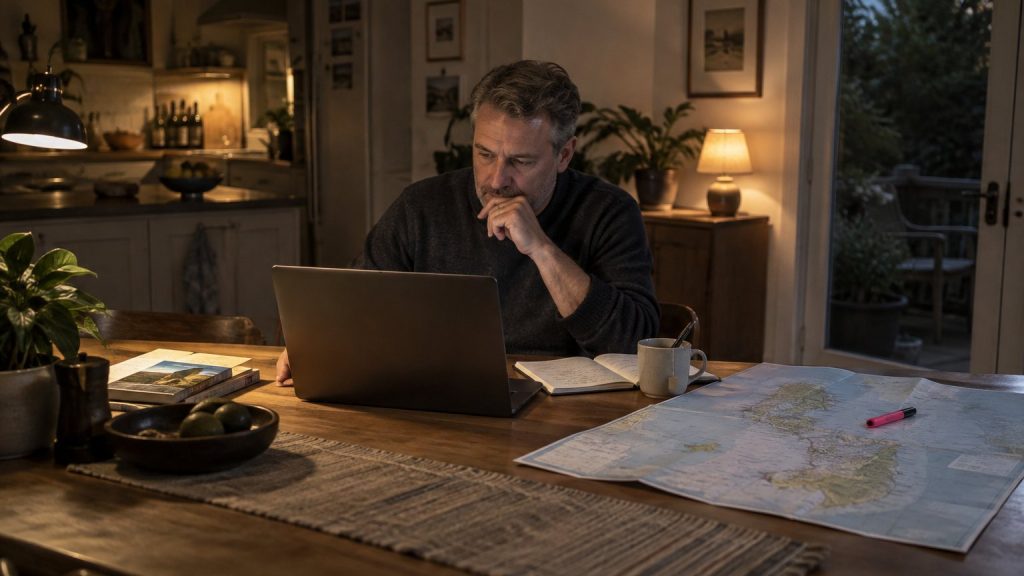
Pick where to meet by the relationship you want and the life you actually have. Each place shows her world, and you, to different people.
| Where you meet | Who may see it early | What it can’t tell you |
|---|---|---|
| International dating sites | Just the two of you, unless one of you shares it | Whether she’s who she says she is |
| Mainstream dating apps | Just the two of you, unless one of you shares it | What she wants, until you ask |
| Facebook, through friends | Her friends and family, depending on her settings | Whether the friend who introduced you knows her well |
| In person in the Philippines | Whoever is around you | Whether it lasts past your visit |
| Filipinas where you live | Mutual friends, if you share a community | Whether she grew up Filipino or Filipino-American |
Filipina dating sites and apps
Dating sites and apps are the easiest place to start from abroad, and they can work. So that you can see which routes have actually led somewhere for real couples, we read every account we could find on SBS Filipino and in Philippine news features where a Filipina and a foreign partner say how they met: 26 couples. Fifteen started online, eleven of them on a dating site or app. Six met in person abroad, three in the Philippines, and two through family or friends. These are stories the media chose to tell, so they show the routes real couples took, not how often each one works.
Of the 26 couples who told their story, 15 started online and none met on a trip taken to find a partner. That doesn’t prove which route works best, but the ordinary routes are the ones these couples describe.
The government’s records point the same way, across far more couples. Filipinos who marry or join a foreign partner abroad register with the Commission on Filipinos Overseas before they leave,1 and until 2020 it recorded how each couple met. We added up its yearly tables from 2005 to 2019: 314,574 people, 91% of them women.23
In 2005, 15% of those who answered had met online. By 2019 it was 47%, and online had led every year since 2013. The older routes shrank but didn’t disappear: even in 2019, half of these couples met through what the CFO calls a personal introduction, at work, or as pen pals put in touch by a relative. So an app is now a normal way to start, and the people around her still bring a lot of couples together.
Our own answer is HeyCrush, the app behind this site, built for people who want a relationship across cultures. It isn’t open yet, so for now that means joining the waitlist at heycrush.com.
Meeting a Filipina on Facebook and Messenger
Facebook’s advertising reach in the Philippines was 95.8 million people in late 2025, equal to about 82 percent of the population, so much of Filipino social life online runs through it.4 When a chat moves from a dating site to Messenger, it may move into the same app she uses with her friends and family. On an app you see her profile and nothing else. On Facebook you may see her world, and, depending on her settings and the friends you share, her world may see you.
Once you’re Facebook friends, people on her friends list may be able to see you there. That may be one reason a woman keeps a new match on a private app for a while, and asking again for her Facebook won’t change it. Our page on meeting Filipina women on social media covers how to be visible there without being the stranger in her comments.
On an app you see her profile; on Facebook her world may see you. A woman who keeps you on a private app for a while may be protecting that, not hiding something.
Meeting women in the Philippines in person
If you’re spending real time in Manila, Cebu or anywhere else, you meet people the way locals do: through work, church, classes, sport and friends of friends. Malls there are family places, often full of parents and kids on a weekend, so they’re for a coffee with someone you already know, not for approaching strangers. The three couples in our count who met in the Philippines met that way too: through a church mission, a volunteer post and a news interview.
A short trip “to meet someone” works best as a visit to a woman you’ve already been talking to. Before you book, video call her more than once. Pay for your own room and transport, and meet the first time somewhere public. Tell someone you trust where you’ll be, keep your own way back, keep where you’re staying to yourself at first, and say no to a last-minute move somewhere private. If she asks you to send money for her fare or a “deposit” before you land, stop, and read red flags when dating a Filipina.
Filipina women where you live
There are Filipino communities in the US, Canada, Australia, the UK and the Gulf, and the woman you’re after may be one town over. In 15 of the 26 couples we counted, she was already living, working, studying or travelling outside the Philippines when they met. Much of that material comes from outlets covering Filipinos overseas, so the share leans high, but the route is real. See how to meet Filipina women outside the Philippines.
The woman you hope to meet may already live where you do. In 15 of the 26 couples we counted, she was outside the Philippines when they met.
Best Filipina dating sites: free, paid, and are they legit?
The best Filipina dating site is the one where women you’d actually want to meet are looking for the same thing you are, and no list can tell you which one that is for you. We don’t rank them, because we can’t check who’s behind each profile. What we can tell you is what the law says and what to look for.
Are Filipina dating sites legit? Ordinary dating sites are not banned by Philippine law, but that doesn’t tell you whether a particular site, or a person using it, can be trusted. The Philippines bans any business that, for money, matches Filipinos with foreigners for marriage, whether by mail order, personal introduction or website, with prison terms of 15 years; the same law says legitimate dating websites that connect people with shared interests are not covered.5 So if someone offers, for a fee, to introduce you to Filipinas for marriage, that matches what the law describes. Ask a lawyer in the Philippines before you pay for anything like it.
Free or paid? Paying doesn’t check anyone’s identity, and free doesn’t mean fake. Legal to run isn’t the same as safe to use: before you pay, read how the subscription renews and how to cancel, what the site does with your photos and messages, and how reporting works. Look for a site that lets you video call inside it, doesn’t charge you per message, and lets you report a profile. Then do your own checking with a video call early on, before feelings and money are involved. A call is one check, not proof of who she is or what she wants, so your money boundaries stay in place after it too.
Quick poll
Would you pay for a dating site?
Anonymous count, nothing else stored.
On every site, the same rule holds. Never send money to someone you haven’t met in person, whatever it’s for, a flight, a visa, a sick parent or a phone. Our guide to Filipina romance scammer lists, and how to check a match yourself shows how.
How to talk to a Filipina: first messages and slow replies
Talk to a Filipina the way you’d talk to anyone you hoped to date: about her day, her work, her family, and what she’s looking for, and not about how beautiful Filipinas are. A message that would fit any woman on the site gets the reply it deserves.
Early on, expect short, polite answers, maybe with a “po” (a Tagalog word that marks politeness). That isn’t boredom by default.
Filipino social values, as Filipino scholars describe them in Filipino words instead of borrowed English ones, sort people into ibang tao, outsiders, and hindi ibang tao, people who are one of us. Outsiders get courtesy and an effort to get along; rapport and real involvement come once you stop being one.6 The research is about how Filipinos treat newcomers in general, not about chat apps. Our reading is that the early stretch is you crossing from one group to the other, so judge her by whether the messages grow longer and more personal over time, not by one exchange.
A short reply tells you how much she wrote, not why she wrote so little. She may work long shifts, be on patchy mobile data, be careful, or not be interested. If voice notes or a burst of messages arrive after a quiet day, answer what she sent rather than asking why she went quiet. If she’s gone quiet, send one clear, easy message and leave room for an answer; a cleverer opener or a new app won’t tell you why this person stopped. And if she keeps not engaging, turns down invitations or says no, that’s your answer: step back rather than try harder.
A short reply tells you how much she wrote, not why. Judge by whether she sometimes starts the conversation, answers what you said and keeps the plans you make, not by one exchange.
Quick poll
She goes quiet for a day. What do you do?
Anonymous count, nothing else stored.
For the signs that she’s warming to you, read how to tell if a Filipina likes you. Once you’re talking, our tips for dating a Filipina pick up from there, and a few words from romantic Tagalog phrases go a long way.
What to expect: how people see a Filipina dating a foreigner
Expect people around her to have an opinion about her before they have one about you. Filipinos call a foreign boyfriend or husband an AFAM, and a couple like that can hear that she’s in it for the money.
A Filipina nurse in Melbourne, who met her British boyfriend on a dating app, told a Filipino-language program that the word itself doesn’t offend her. What disappoints her is the reaction she hears: may isang kababayan na naman tayong nakaahon sa kahirapan, roughly, another one of our own has climbed out of poverty. In her case she is the permanent resident, and he is the one on a visa.7
A woman in Dapitan City, in Mindanao, used dating apps to meet foreign men; over four years, seven of the nine she met became boyfriends. Some sent her money, and people online called her a gold digger. She says she never asked for it, and that what she wants, more than money, is a man who accepts her past.8
You might be bracing for a request for money. She may have a money worry of her own: what people will say she’s in it for. None of that means ignoring a request if one comes. It means not settling her motive for her before she’s said a word about it.
You may be bracing for a request for money. She may be bracing for people to say she’s in it for the money.
The moments in the game below, and what each one means, come from these writers, researchers and outlets: SBS Filipino910, Cultural Atlas111213141516, Inquirer USA1718192021, Rappler22232425, Arab News26, Goldsmiths, University of London27, Philippine Daily Inquirer28, SBS Voices29, PhilSTAR Life30, Gideon Lasco31, Interaksyon32 and Asia News Network33.
Challenge yourself
Read the signals: what she says, and what it means
Eight everyday moments from dating a Filipina, from her messages to Sunday lunch with her family. Some sound rude, some sound like promises, some sound like trouble. Pick what each one really means, then see why, and how you did against everyone else.
1. Kumain ka na?
Chat, 7 in the morning her time
- Her Good morning! Kumain ka na? 😊
A way of saying she cares, like ‘how are you?’
“Have you eaten?” is a routine Filipino greeting. Asking about food is a way of showing care, and many people open a chat with it.
What to do: Answer it like a hello: tell her what you ate, and ask her back.
2. Salamat po
Chat, the first week
- You Here’s a photo from my hike today.
- Her Wow, ang ganda po! Salamat po for sharing.
A polite, respectful way of speaking
“Po” is a politeness marker added when speaking to someone older or someone you’re still getting to know. It shows respect, not distance.
What to do: Don’t read coldness into it. As you get closer, she may drop it on her own.
3. Ge
Chat, Thursday
- You Dinner on Saturday?
- Her Ge
Yes, sure
“G”, “Ge” or “Game” are everyday ways to say yes to a plan. “Ge” is short for “sige”, meaning sure or okay.
What to do: Take it as a yes and confirm the time and place.
4. Charot!
Chat, late evening
- Her Maybe I’ll just fly over and surprise you. Charot!
Just kidding, or half kidding
“Charot” and “Eme” are tags meaning “just kidding” or “half kidding”. Half kidding can mean part of it is still meant.
What to do: Laugh along, and if you’d like the trip to happen one day, say so.
5. “Nothing”
Chat, the evening after you missed your call
- You Is something wrong?
- Her Nothing.
A hurt she wants you to notice and soothe
This is often tampo: pulling back for a while over a small hurt, hoping you’ll notice and respond with lambing, gentle affection and reassurance.
What to do: Don’t argue the facts. Say sorry for the missed call and show you care; later, talk about what each of you needs when upset.
6. The pouting sticker
Chat, after you said you’d be busy all weekend
- Her [sends a pouting, arms-crossed sticker]
A playful sulk that invites you to coax her
Stickers are a common way to show tampo online, and it’s often playful: a not-really-mad sulk that asks for a little attention.
What to do: Coax her a little: a sweet message or a promise of a call goes a long way.
7. Bhie
Her group chat with work friends, which she showed you
- Her Thanks bhie, see you Monday!
A friendly term of endearment
“Bhie” or “bie” is a Filipinized “baby”, used between close friends and co-workers as well as partners. Context decides.
What to do: Don’t treat it as a red flag on its own.
8. MU
Chat, a month in
- Her My friend asked if we’re MU na 😅
The stage before an official relationship
MU means “mutual understanding”: the stage before a formal relationship, close to “the talking stage”.
What to do: If you want to be official, say so plainly. MU is the moment to talk about it.
9. Happy monthsary!
Chat, the 14th of the month
- Her Happy monthsary, love! ❤️
A monthly mini-anniversary many couples mark
A “monthsary” is the monthly version of an anniversary, and many Filipino couples mark it.
What to do: Wish her a happy monthsary back. A sweet message is plenty.
10. Taglish
Chat, about her day
- Her Super pagod today, ang daming customers. But okay lang, happy naman ako.
Normal everyday Filipino conversation
Mixing English and Tagalog mid-sentence is normal everyday Filipino speech. Many Filipinos also speak a regional language at home.
What to do: Ask what a word means when you’re curious. Most people like being asked.
11. Noche Buena
Video call, Christmas Eve
- Her Say Merry Christmas to everyone!
- Her family MERRY CHRISTMAS!
A way of including you in the celebration
Calling in during the family meal is how Filipinos include someone far away in the celebration, the same way families include relatives working abroad.
What to do: Greet everyone warmly and say Merry Christmas back. You don’t need to perform.
12. The long quiet call
Video call, Sunday
- Her I’ll cook while we talk, okay? Just stay on.
A way of being together across the distance
Long calls that move between talking and simply being on screen together are a recognized way Filipino families separated by distance stay close.
What to do: Do your own thing on camera too. The quiet is part of it.
13. The karaoke
Video call, a holiday at her family’s house
- Her Sorry, my titos are singing! 🎤 Can you hear me?
A normal part of a Filipino celebration
Loud karaoke is a normal part of celebrations, especially at Christmas. Neighbours complain about it too, but it’s ordinary.
What to do: Laugh, and offer to call back later, or ask who’s singing.
14. “Ha?”
Video call with her family
- You So I said I’d fly in on the eleventh…
- Her uncle [jaw drops, mouth open] Ha?
He didn’t understand what you said
That open-mouthed “Ha?” means what you said was unclear or confusing.
What to do: Say it again, slower and simpler.
15. So many titas
Video call, a family gathering
- Her This is Tita Weng, Tita Baby, Tito Boy and Ate Joy!
Respect titles, used even for family friends
Tita, Tito, Ate and Kuya are titles of respect for older people, used whether or not they’re related. Close family friends count as family.
What to do: When in doubt, call an older woman Tita. Nobody will mind.
16. Twenty questions
Video call, first time meeting her relatives
- Her aunt How old are you? What’s your work? Where did you study?
They’re working out how to address you
Age, work and education help them work out how to address you correctly, because age and status shape how Filipinos speak to each other. Questions about income are a different matter and considered sensitive.
What to do: Answer simply and ask about them in return.
17. The eyebrow
Video call; her brother walks past behind her
- Her brother [catches your eye and lifts his eyebrows, says nothing]
A wordless hello
Raising the eyebrows while catching someone’s eye is a wordless hello, like a nod.
What to do: Raise your eyebrows or smile back.
18. Everyone laughs
Video call with her family
- You So, do you all think she should move abroad one day?
- Her family [everyone laughs]
Laughter easing an awkward moment
Laughter can relieve tension or cover embarrassment, not only show amusement. A big question asked in front of everyone is exactly that kind of moment.
What to do: Let it go for now, and ask her privately later.
19. The bill
Your first date, at a restaurant
- Waiter Here’s your bill, sir.
- Her [doesn’t reach for her wallet]
On a first date, many expect the man to pay
Many Filipinos expect the man to pay on a first date; others prefer KKB, each paying their own, and it’s an open debate. It isn’t a sign of anything by itself.
What to do: Pay for the first date if you invited her. Later, talk about how you’ll split things.
20. Filipino time
Your second date; you said 7pm
- Her Sorry, traffic! Malapit na ako. [it’s 7:45]
A relaxed approach to time at social plans
Socially, many Filipinos take a relaxed approach to time, often called “Filipino time”. Punctuality is expected for formal things like work and appointments.
What to do: Plan for some slack, and if lateness bothers you, say so kindly.
21. The pulled-back kiss
A date, walking in a busy mall
- You [leans in to kiss her]
- Her [pulls back, smiling]
Public affection is uncommon; she’s being modest
Public displays of affection are uncommon in the Philippines, and modesty in public is the norm. It’s about the place, not about you.
What to do: Save the kiss for a private moment, and don’t take it personally.
22. The slow yes
Planning your next date
- You Want to come to my friend’s party Saturday?
- Her Hmm… yes, okay… maybe.
Possibly a polite way to avoid saying no
Many people avoid a flat no to save face, so a hesitant yes can be a polite non-refusal. Pay attention to what isn’t said.
What to do: Make it easy to say no: “No pressure, we could do something just the two of us instead.”
23. Psst!
A restaurant, getting the waiter’s attention
- Her Psst! Kuya, bill please.
An ordinary way to get attention
“Psst” is an ordinary way to get someone’s attention in the Philippines.
What to do: Nothing to do. You’ll hear it everywhere.
24. The lip point
At a mall, you ask where the restroom is
- You Where’s the CR?
- Her [purses her lips toward the corner]
She’s pointing: it’s that way
Filipinos often point with their lips. Pointing a finger can feel rude, so you follow the direction of the pout.
What to do: Look where her lips point.
25. The wave
Across a crowded room
- Her [waves at you, palm down, fingers flapping toward herself]
Come here
Palm down, fingers flapping toward the body, is the usual Filipino way to say “come here”.
What to do: Walk over.
26. Kain tayo!
Walking past a group eating lunch outside
- A group of her friends Kain tayo!
A courtesy, not a literal invitation
“Kain tayo” (“let’s eat”) to someone passing by is usually a courtesy offered out of respect. Inside a home you’re visiting, food offers are usually meant.
What to do: Smile and thank them. Nobody expects you to sit down.
27. “Tumaba ka!”
Arriving at her family’s house
- Her tita Uy! Tumaba ka!
A greeting that notes how you’ve changed
“You’ve gotten fatter!” is a common greeting that remarks on how someone has changed since last time. It marks time and opens conversation, often out of concern. Some Filipinos do find it hurtful.
What to do: Laugh it off and say it’s all the good food. If it bothers you, tell her privately.
28. Kailan ang kasal?
Her family’s Christmas reunion
- Her lola So, kailan kayo ikakasal? When’s the wedding?
Routine reunion talk
Relatives commonly ask about marriage, work, school and age at reunions. It’s routine conversation, not a demand.
What to do: Smile and say “Soon, I hope!” or “We’re getting to know each other first.”
29. Mano po
Her niece greets you at the door
- Her niece [takes your hand] Mano po, Tito! [presses the back of your hand to her forehead]
A respect gesture that asks for your blessing
The mano is a gesture of respect toward elders that also asks for their blessing, often done on arrival.
What to do: Let her. It’s a sign of respect toward you.
30. Kuya
At her family’s house
- Her younger cousin Kuya, do you want more rice?
A standard title of respect
“Kuya” (older brother) is a standard title of respect for someone a little older, used even with strangers and shop staff.
What to do: Answer as you would to your name.
31. More food
Sunday lunch at her parents’ house
- You No, no, I’m full, thank you!
- Her mother [puts more food on your plate] You don’t like it?
Hospitality; a flat no can sound like you didn’t like it
Insisting on food is hospitality, and a direct refusal can be heard as not liking the food.
What to do: Take a little more and praise the cooking.
32. The unopened gift
You hand her parents a gift
- Her father Salamat! [sets it aside, unopened]
Gifts usually aren’t opened on receipt
Gifts are usually not opened in front of the giver.
What to do: Don’t wait for a reaction. Just enjoy the visit.
33. Pasalubong
You arrive from abroad
- Her brother Welcome! Where’s the pasalubong? 😄
A small homecoming gift is customary
Pasalubong is a homecoming gift that says “I thought of you while I was away”. It doesn’t need to cost much: snacks or small treats from home are typical.
What to do: Bring something small to share, like chocolates or snacks from your country.
34. Baby, Girlie, Mon Mon
Meeting her relatives
- Her That’s my uncle Baby, and my cousins Girlie and Mon Mon!
Ordinary family nicknames
Nicknames like these are given in childhood and used by close family all their lives. Joking about them is inappropriate.
What to do: Don’t laugh at them, and use a nickname only once you’re invited to.
35. Money for home
Chat, payday
- Her Sent half my salary home for my brother’s tuition. Tipid muna ako this month!
Helping family is widely seen as her duty
Supporting family is widely seen as a duty of those who are doing well. Telling you isn’t the same as asking you.
What to do: Respect it. If money ever comes up between you, talk it through openly.
36. After my siblings finish school
A serious talk, a few months in
- Her I can’t think about marriage until my siblings finish school.
A real duty to her family first
Many breadwinners put marriage on hold because they provide for their parents and siblings. It’s about her family, not about you.
What to do: Ask what her timeline looks like, and share yours honestly.
37. Pwera usog!
You praise her baby niece
- You She’s so cute!
- Her aunt Pwera usog!
A protective saying after a baby is praised
It’s a protective folk phrase said after a baby is praised, from the belief that praise can draw harm. Nothing personal.
What to do: Smile and carry on. It isn’t about you.
Most of what sounds odd, nosy or rude is ordinary daily life in the Philippines, and the real signals are quiet ones: a slow yes, a “nothing”, a laugh that covers embarrassment. When you’re not sure, ask her kindly what she meant.
These moments are made up, built from the writers, researchers and outlets cited above. Families and regions differ. We keep your answers and score anonymously, with the date, and nothing else.
Why some Filipinas date foreign men has as many answers as there are women, and both of these women said money wasn’t theirs; why some Filipinas are drawn to foreign men goes further. The label works on you too: if “passport bro” is what you’re worried people will call you, what a passport bro is answers it, and for the personality question, read what Filipina women are like.
Filipina girlfriend: family, money and sending money home
Ask her early how close she is to her family and how much they’ll be part of your life together. A woman who helps her parents and siblings with money isn’t asking you to.
A Filipina married to a non-Filipino said on a Filipino-language program that she still sends money home. She called it a valued habit that some people call toxic, said money independence is a hot topic for Filipinas married to non-Filipinos, and pointed to separate accounts and honest talk as what works for some couples.34 You’ll hear the phrase utang na loob, literally a debt of the inner self and usually translated as a debt of gratitude; our page on money in Filipino relationships explains it and what it means for you.
Two things hold together. Her helping her family is her business, and you can talk about how much you want to be part of it once you’re a couple. And a request for money from someone you haven’t met is how romance scams work, whatever the reason given.
Her helping her family is her business. You don’t have to prove a request is a scam to refuse it: don’t send money to an online match you haven’t met.
Once you have met and you’re together, she may one day ask you to help with a big family bill or a sibling’s school fees. Meeting her doesn’t make a money request safe: check the bill or the school yourself, and give only what you can afford. Decide together what you can give and how often; paying the bill or the school directly is a normal way to help, and saying no to an amount is not saying no to her. A request that keeps growing, comes with pressure, or follows a refusal with anger is the warning sign. For the courtship steps, from first meeting to meeting her parents, read Filipino dating culture.
Quick poll
She asks for help with a family bill. How would you give it?
Anonymous count, nothing else stored.
Filipina girlfriend: faith, marriage and long distance
Nearly four in five Filipinos are Catholic, according to the 2020 census, and for many women faith shapes how fast things move, what happens before marriage, and what marriage means.35 Ask her early how much it matters to her rather than guessing from where she grew up.
If you’re thinking about marriage, the paperwork, the visa and the Philippines’ own rules on ending a marriage all need a professional’s answer for your two countries. Our page on finding a Filipina wife lays out the questions, and a licensed immigration lawyer answers them. One fact worth knowing early: the same anti-mail-order law requires the Commission on Filipinos Overseas to give pre-departure guidance to Filipinos who have married partners from other countries.5
If you live far apart, the relationship may run on a phone for months or years. Regular video calls show you more of her life than months of messages, and agree early on who pays for the first visit. In the couples we counted who started online in different countries, one or both of them flew to meet, months to years after they first wrote. For time zones, visits and flights, see courting a Filipina long distance.
Quick poll
Who should pay for the first visit?
Anonymous count, nothing else stored.
Filipinas outside the Philippines, including Filipino-Americans
A Filipina who grew up in the Philippines and moved abroad as an adult may carry the family ties, the faith and the language much as this page describes. A Filipina-American born or raised in the US may not, or only partly.
A second-generation Filipino-American woman may have grown up in a Filipino-American culture of its own, not a watered-down version of her parents’. She may understand Tagalog without speaking it, or not know it at all. Her family’s view of you may reach her through her parents at dinner rather than through a cousin’s Facebook comment. Ask which she is before you assume either. Looking for Filipino-American dating sites? The mainstream apps where you live can reach her too, and you meet her as a neighbour, not as a nationality.
One Filipina in Australia met her Australian husband on a dating app. The program describes her as raised to think in terms of “we” while he was raised to value the individual, and she says he handles her family fine.10
Where she lives changes the rest too: a nurse in London, a hotel worker in Dubai and a student in Toronto live very different lives, with very different hours and freedoms.
Quick poll
Does it matter where she grew up?
Anonymous count, nothing else stored.
Questions men ask before dating a Filipina
Best city in the Philippines to meet women
No city has better women than another, and a list that ranks cities by their women is selling you a trip. Big cities, Metro Manila, Cebu and Davao, have more people and more places to meet them through work, church, classes and friends. The better question is where you’ll actually spend time, because that’s where you’ll meet people, and where she’ll need to see you again.
Questions to ask a Filipina
Ask what you’d ask anyone you hoped to keep seeing: what she does, what she’s looking for, and how much her faith matters to her. Once you’re close, ask how she and her family handle money and whether she sends some home, and whether she’d want to live near her family or would move. Ask about her past only the way you’d be glad to be asked about yours. Skip anything about how Filipinas compare with women at home.
Ask us
What do you still want to know before you start?
Tell us the question this page didn’t answer. We read every one, and the common ones get answered on this page or the page that covers them.
How we put this page together: We did three things ourselves. We added up the Commission on Filipinos Overseas’ yearly records of how 314,574 Filipinos who left to join a foreign partner from 2005 to 2019 met them, checking every figure against the printed tables: meeting online rose from 15% to 47%. We read every account we could find on SBS Filipino and in Philippine news features (GMA, Inquirer, Rappler) in which a Filipina and a foreign partner say how they met, checked each quote against its page, and counted the routes of 26 couples on 5 October 2026: 15 started online and none on a trip taken to find a partner. And we built the game’s 37 everyday moments from 25 sources in 12 outlets and research groups, again checking every quote against its page. The advice on money and the law rests on the Philippines’ anti-mail-order law and on Filipino research into how people treat newcomers.
Why we made it: Many guides to dating a Filipina rank sites or name the best cities to visit, as if a shortcut were the question. A man starting out needs two other things: which routes real couples actually took, and how to read the everyday moments that otherwise come across as rude, cold or like a promise. So we counted the first, in the government’s records and in couples’ own stories, and built a game for the second.
References
- 1
- 2
- 3
- 4
- 5
- 6
- 7
- 8
- 9
- 10
- 11
- 12
- 13
- 14
- 15
- 16
- 17
- 18
- 19
- 20
- 21
- 22
- 23
- 24
- 25
- 26
- 27
- 28
- 29
- 30
- 31
- 32
- 33
- 34
- 35
How this article was made
Researched and drafted with AI assistance from the sources cited below, then reviewed, edited and fact-checked by a human editor before publishing. Every factual claim is tracked in our verification ledger.
Read our full editorial policy →
Comments
Every comment is read by a person before it appears, usually within 48 hours. First names or pseudonyms only.
More comments load as you scroll.